
Criminal Court Records in St. Mary's County
A criminal court record is the court-level file opened after a statement of charges, indictment, information, appeal, or other criminal filing reaches the Judiciary. The file can include charging documents, arraignment events, bond conditions, motions, orders, hearing entries, verdicts, plea entries, dispositions, sentencing, probation conditions, and appeal notices. For the arrest-to-charge pathway itself, use arrest records and court charges; for the full court case history, the criminal record is the more complete source.
Criminal jurisdiction in St. Mary's County is split between the District Court of Maryland and the Circuit Court for St. Mary's County. District Court handles misdemeanors and certain felonies without jury trials, along with traffic citations and high-volume criminal calendars. Circuit Court handles felony criminal matters, certain misdemeanors, indictment cases, jury-trial matters, and appeals from District Court. Initial charging can involve District Court Commissioners at 23110 Leonard Hall Drive, and prosecution decisions come from the Office of the State's Attorney.
The Office of the State's Attorney for St. Mary's County is the local prosecution source tied to Circuit Court and District Court criminal divisions.
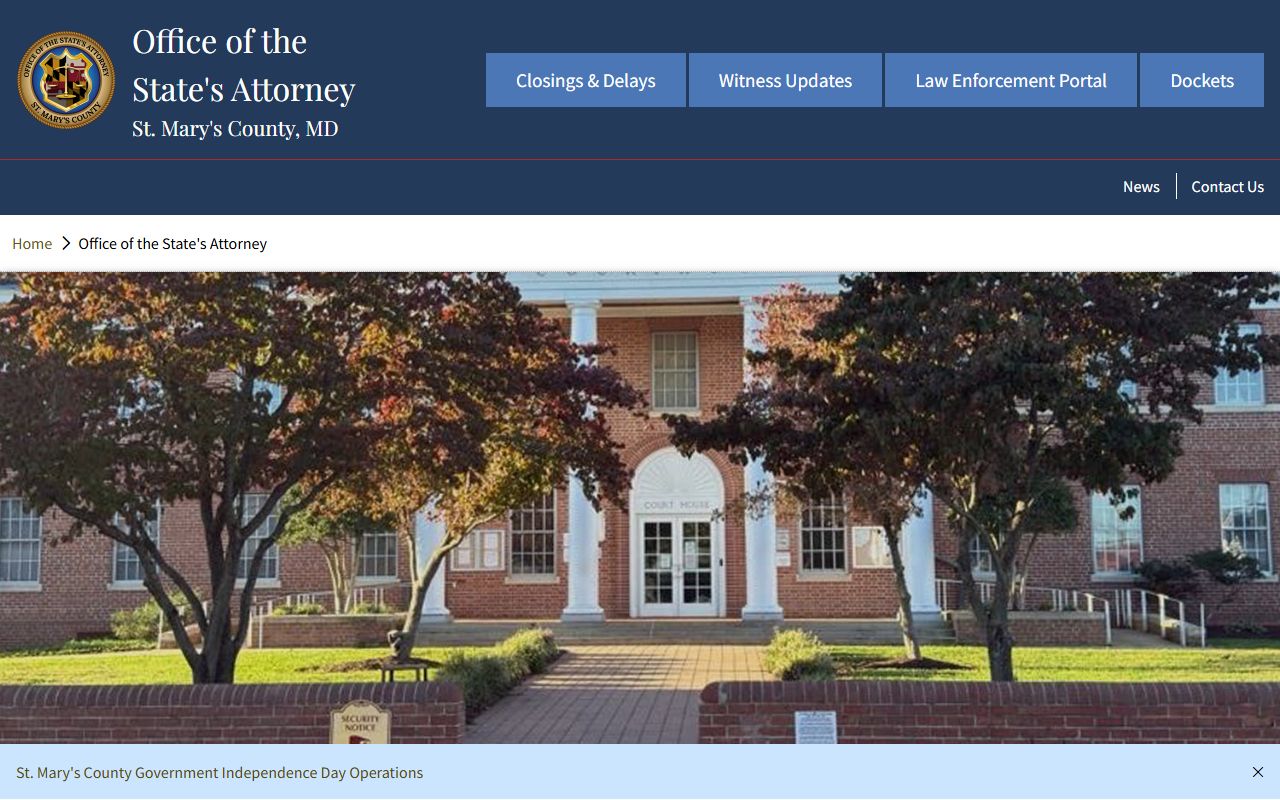
Prosecutor filings and dispositions may appear in the court record, but victim/witness reporting and prosecution office contacts are separate from court-record lookup.
How to Search St. Mary's County Criminal Court Records
The main online search channel is Maryland Judiciary Case Search. It is a statewide public case-summary system for Circuit Court and District Court case information. For St. Mary's County criminal matters, use it to locate the court, case number, defendant, hearing dates, charge text, disposition, and docket entries that remain available for public online display. Case Search is not a complete courthouse file and should not be used as a criminal background check. Maryland DPSCS/CJIS fingerprint-supported records are the proper criminal-history channel when a formal background record is required.
- Open Maryland Judiciary Case Search and accept the public-use notice or terms screen.
- Search by defendant name, company name where relevant, or case number. A case number is best when available.
- Narrow the search to St. Mary's County and choose District Court or Circuit Court if the court level is known.
- Use case type, filing date, first name, or party type to reduce unrelated matches and avoid the 500-result limit.
- Open the case summary to read the charge list, docket entries, hearing dates, current status, disposition, and sentence fields where public.
- Request certified copies, pleadings, orders, or older files from the Clerk of the Circuit Court or District Court clerk.
Law-enforcement records are a different channel. Sheriff's police reports, accident reports, warrants, and Public Information Act requests go through the St. Mary's County Sheriff's Office records lines, Office of Professional Responsibilities, or NextRequest. Jail custody status belongs on the inmate records path. Active warrant questions belong on the warrant records path.
Stages of a Criminal Case
A criminal case can begin with a statement of charges, citation, arrest, commissioner event, information, or indictment. The court record grows as the case moves through arraignment, pretrial hearings, motions, plea negotiations, trial, disposition, sentencing, probation, and possible appeal. Some cases remain in District Court. Others move to Circuit Court after indictment, appeal, or a jury-trial path. Each stage may create a docket entry even when the underlying document is not available through public Case Search.
Case flow: Charges Filed › Initial Appearance / Arraignment › Pretrial / Motions › Plea or Trial › Disposition › Sentencing
| Stage | What Happens |
|---|---|
| Charges Filed | A statement of charges, indictment, information, citation, or other charging paper opens the court case. |
| Arraignment | The defendant is formally advised of charges and a plea or scheduling event may be entered. |
| Pretrial / Motions | Parties file motions, address discovery, argue suppression or procedural issues, and schedule hearings. |
| Plea or Trial | The case resolves by plea, bench trial, jury trial, dismissal, nolle prosequi, or another court action. |
| Sentencing | If there is a conviction or qualifying plea, the court may impose fines, costs, incarceration, probation, restitution, or conditions. |
The Maryland Office of the Public Defender St. Mary's County office is a defense-resource source for people with active criminal cases who cannot afford counsel.
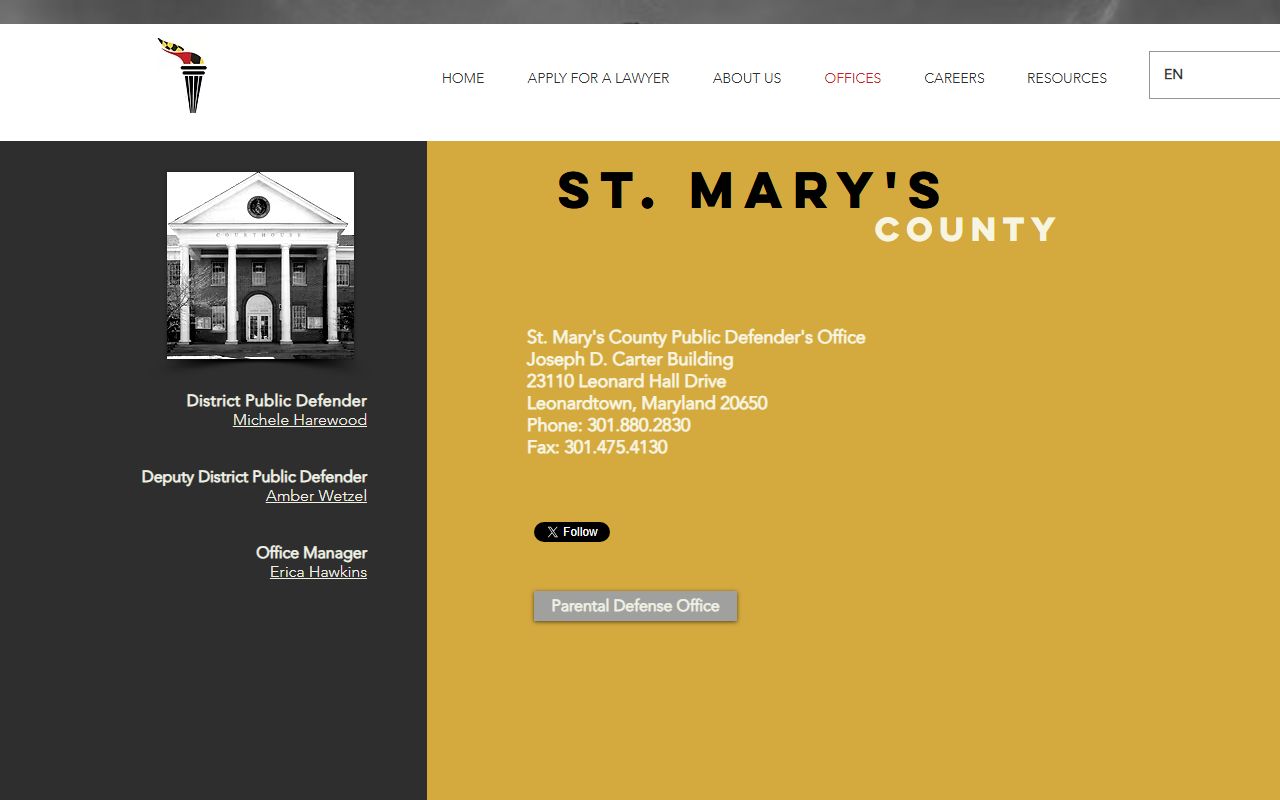
Defense representation does not change public access rules, but counsel of record may have access needs different from a casual public searcher. Maryland Courts public defender information also says a person may apply at a District Court Commissioner's Office, and the statewide location number is 1-833-453-9799.
What a St. Mary's County Criminal Court Record Shows
A public criminal case summary may show only selected fields, while the courthouse file may contain more complete pleadings and orders. Typical fields include the case number, court, county, case type, filing date, defendant, date of birth where allowed, attorneys, prosecutor, judge or magistrate, hearing date, charge, docket entries, disposition, sentence, probation, fines, costs, restitution, and appeal notices. Redactions can remove Social Security numbers, medical information, minor-victim information, financial account details, juvenile material, and sealed or expunged content.
| Field | What It Shows |
|---|---|
| Case Number | The District Court or Circuit Court identifier needed for direct lookup and copy requests. |
| Defendant | The person accused in the case; public summaries may show date of birth where allowed. |
| Charges | Offense text, count information, citation or charging language, and sometimes statute references. |
| Attorney / Prosecutor | Counsel of record, State's Attorney entries, public defender, or private counsel when listed. |
| Hearings | Arraignment, trial, motion, review, sentencing, or other scheduled court events. |
| Plea | The defendant's formal response, such as guilty, not guilty, or another legally recognized plea. |
| Disposition | The outcome for a charge or case, including guilty, not guilty, dismissed, nolle prosequi, stet, closed, open, or transferred. |
| Sentence | Public sentencing information such as fines, costs, probation, incarceration, restitution, or conditions. |
Charges vs. Convictions
A charge is an accusation filed in court. A conviction is an outcome after a guilty plea, trial verdict, or other qualifying legal resolution. St. Mary's County criminal court records may show charges that were later dismissed, amended, reduced, nolle prossed, placed on stet, or resolved by not-guilty finding. Do not treat every listed charge as a conviction. For current custody, use the Sheriff's incarcerated-individual lookup; for the court outcome, read the disposition and sentence fields.
| Charge | Conviction | |
|---|---|---|
| Stage | Accusation filed in court. | Final or qualifying court outcome after plea, verdict, or judgment. |
| Standard | Based on charging rules and probable cause or prosecutor action. | Requires guilty plea, finding, verdict, or other legal basis. |
| Public Record | Often public, but online display may be limited by Maryland rules. | Often public unless sealed, expunged, restricted, or otherwise removed from display. |
The St. Mary's County Sheriff's Office about page identifies the local law-enforcement agency context that can precede a criminal court filing.
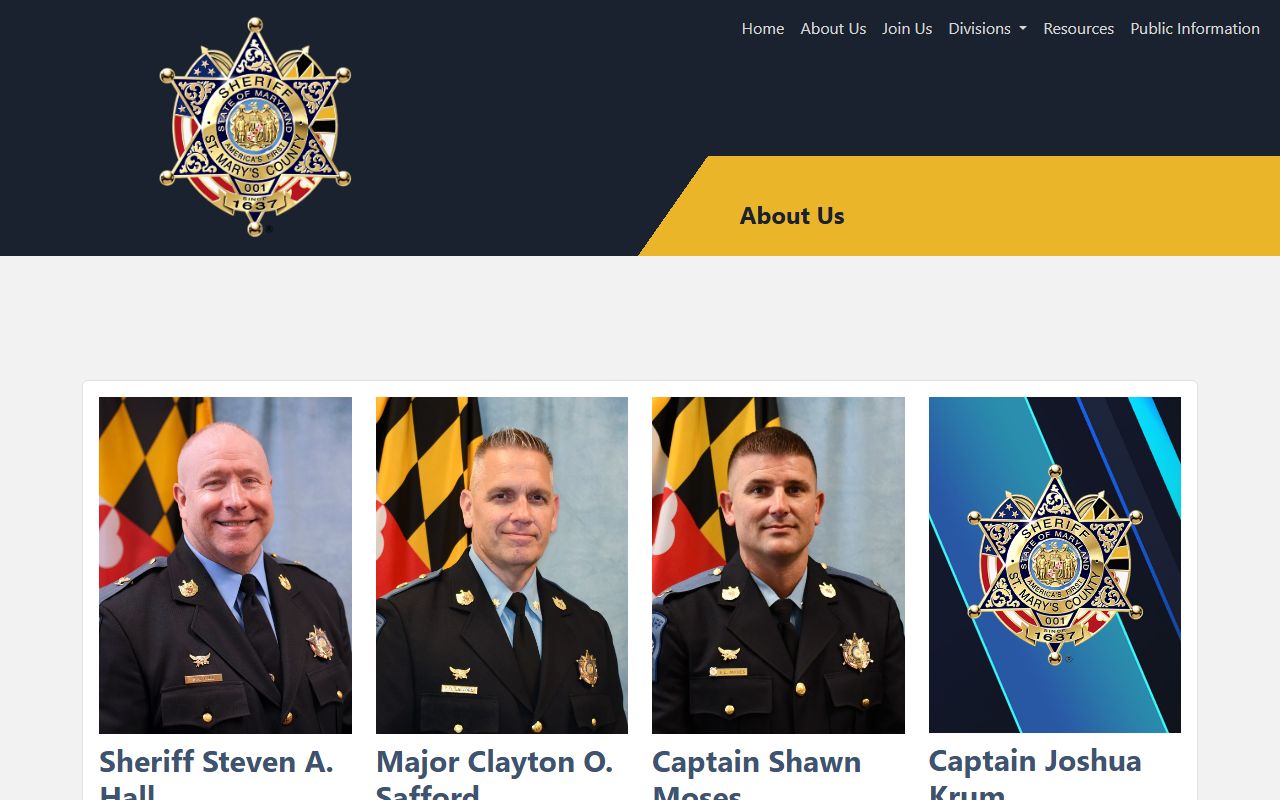
Sheriff records can explain an incident or arrest, but the court record controls the filed charges, hearings, dispositions, and sentence.
Reading Dispositions and Sentences
Maryland criminal dockets use terms that matter. Nolle prosequi means the prosecutor decided not to pursue a charge. Stet means the case or charge has been placed on an inactive docket. Dismissed means the court or prosecution ended the charge without conviction. Probation before judgment is a Maryland disposition where judgment may be stayed under specific conditions. A sentence may include incarceration, suspended time, supervised or unsupervised probation, fines, costs, restitution, treatment requirements, or other conditions. If a disposition is unclear, the clerk's file or a certified docket may be needed.
Sealed vs. Expunged Records
Maryland's online display rules are especially important for criminal records. Case Search no longer displays some charges ending in nolle prosequi, dismissal, acquittal, or not guilty; stet charges after three years; sole cannabis possession charges disposed before July 1, 2023; and pardoned cannabis possession convictions. That online-display limit is not always the same as a full expungement. Expungement usually requires filing in the court that handled the case, service on required parties, and a decision or lack of objection under Maryland law and forms.
| Sealed | Expunged | |
|---|---|---|
| Visibility | Restricted from public view by rule or court order. | Removed from public access under an expungement order or qualifying legal rule. |
| Access | May still be available to certain parties, courts, agencies, or people with legal authority. | May remain available only for limited legal or agency purposes depending on record type. |
| Eligibility | Depends on case type, confidentiality rule, and court order. | Depends on charge, disposition, timing, objections, and current Maryland expungement law. |
The Sheriff's Corrections Division page explains the Detention and Rehabilitation Center context for people awaiting trial or serving local sentences.
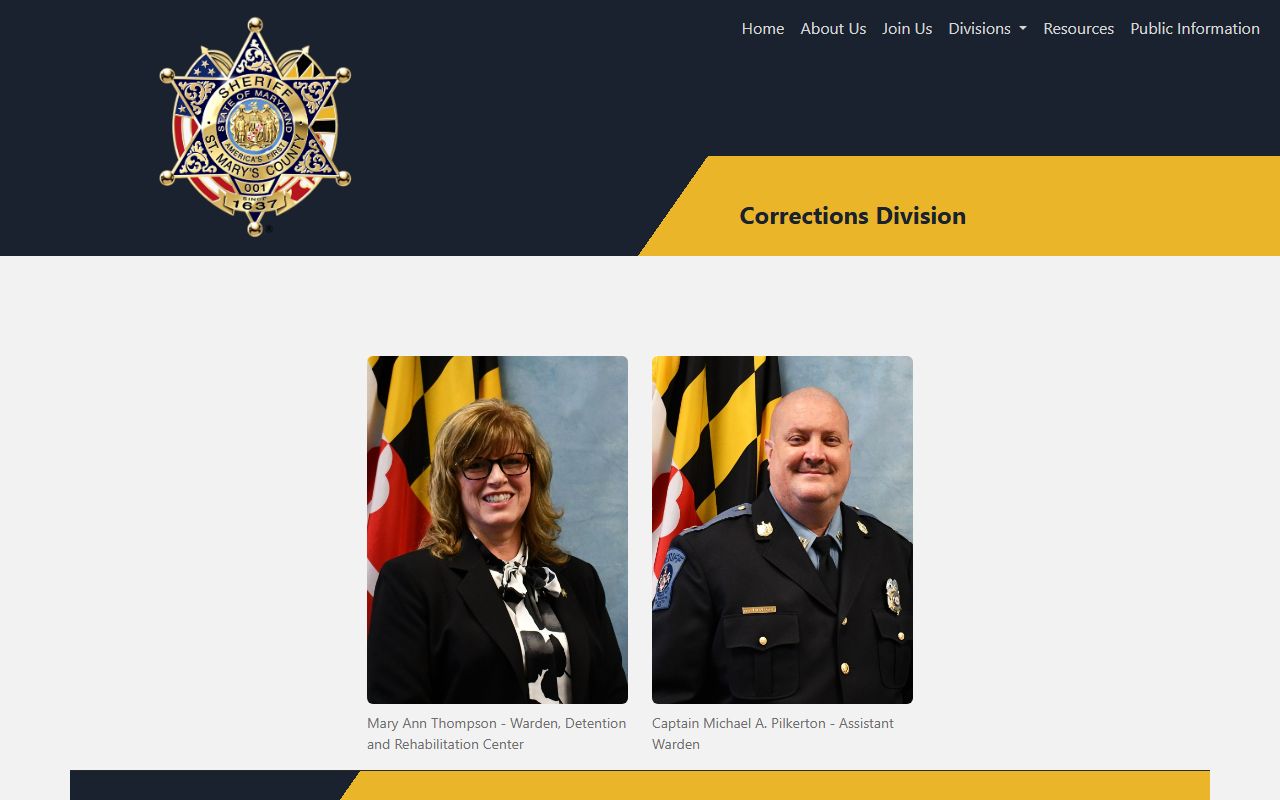
Custody information can change faster than a court docket, so jail status and court disposition should be checked through their own official channels.
Public Access to Criminal Court Records
Maryland Rules 16-901 et seq. govern requests to Maryland judicial-record custodians. Public criminal summaries are generally available through Case Search when not restricted or removed from online display, but the complete record remains with the court. For St. Mary's Circuit Court criminal files, contact the Clerk of the Circuit Court at 41605 Courthouse Drive, Leonardtown, MD 20650, phone 301-475-7844. For District Court criminal and traffic-related criminal files, contact the District Court at 23110 Leonard Hall Drive, Leonardtown, MD 20650-5831, phone 301-880-2700.
Key Authorities:
Maryland Rules 16-901 et seq. govern judicial-record requests to court custodians.
Maryland General Provisions Article §§ 4-101 through 4-601 is the Public Information Act framework cited for Sheriff's Office agency records.
Background Check Considerations
Case Search is not a formal criminal background check. The official research notes that Maryland DPSCS/CJIS fingerprint-supported records are the proper criminal-history channel when a criminal-history record is needed. Public court summaries can be incomplete for background-screening purposes because online display rules, expungements, seals, identity matches, and missing identifiers can distort the picture. Employers, landlords, licensing bodies, insurers, and others subject to the Fair Credit Reporting Act need compliant screening procedures rather than casual court searches.
Important: Public case lookup is not an FCRA-regulated consumer report and should not be used for employment, tenant, credit, or insurance screening.
The Sheriff's incarcerated-individual information page links local jail lookup, DPSCS, VINE, commissary, visitation, and services resources.
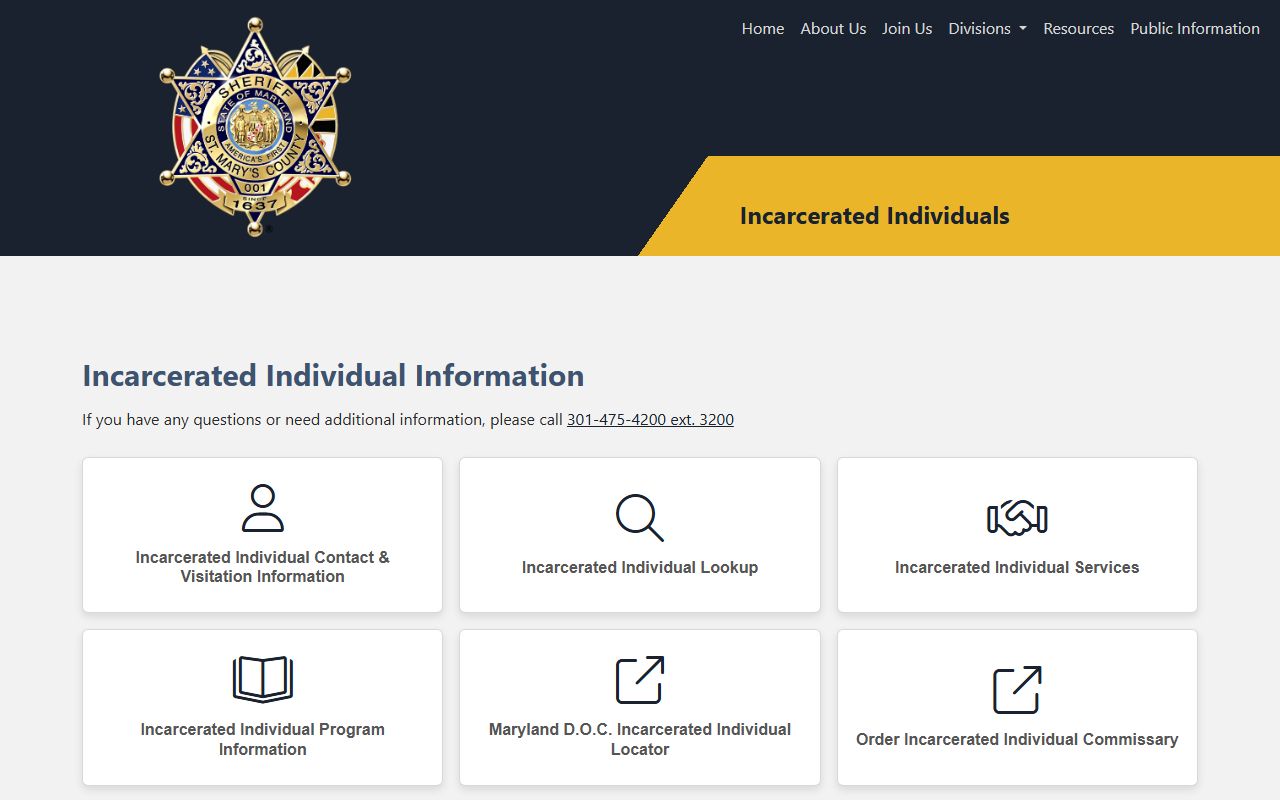
That custody page is useful when a criminal case record mentions bond, detention, sentencing, or transfer, but it is not the court's official case file.
Restricted Criminal Court Records in St. Mary's County
Restricted criminal court records include sealed, expunged, juvenile, medical, mental-health, minor-victim, and certain confidential family or financial materials. Some records may be visible only to parties, counsel, agencies, or people with a court order. Protective-order and domestic-related files can also contain sensitive information. When a person has legal authority to seek access, the correct path is the clerk of the court where the case was heard, not a broad internet search.
The SMCSO app is not documented as a court-record, jail-roster, or warrant-search tool. Official sources describe the SMCSO app as a tip and public-safety alert channel. Sheriff's offense reports, accident reports, civil process, warrants, and PIA requests use separate Sheriff's Office records channels, including offense report extensions 1994 or 1991, accident report extension 1932, warrant extension 1993, OPR extension 1903, and NextRequest. Those channels may provide law-enforcement records, but criminal court records remain with the courts.